
Case Studies: Case Study #3 – Broadlawns Medical Center
From Bylaws to Implementation: How Broadlawns Medical Center Expanded Access, Empowered Pharmacists, and Improved Patient Care
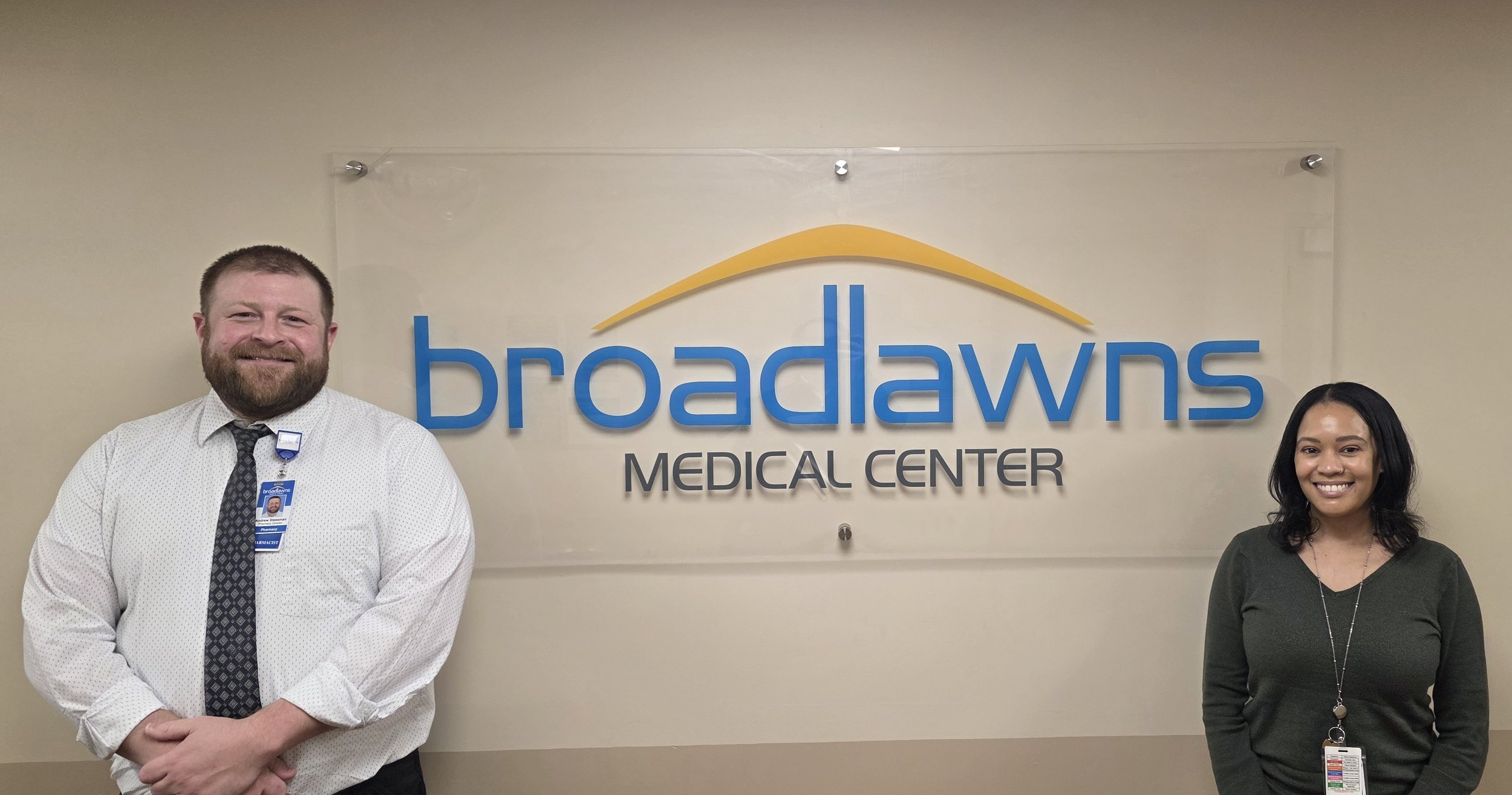
Practitioners: Chayla Morris, PharmD, BCACP; Andrew Stessman, PharmD
Setting: Health system pharmacy, Iowa
Care Model: Pharmacist-provided services across the continuum of care
Why This Case Matters
“At the end of the day, we are kind of the catch-all for patients in the area. We have a large, very large portion of patients that are underserved, uninsured, underinsured…Everything that we’re trying to do at Broadlawns is to get back to our patients and to make sure that we can improve their access to high-quality healthcare.”
Like many Iowa communities, patients of Broadlawns Medical Center have faced a variety of barriers related to their social determinants of health. When Iowa introduced its standard of care regulatory framework, it created a pivotal opportunity for health systems to reimagine the role of pharmacists. At Broadlawns Medical Center, pharmacy leaders didn’t just adopt the framework—they used it as a catalyst to transform care delivery, governance, and team-based practice. As one of the first health systems to adopt standard of care within Iowa, Broadlawns has set the stage, demonstrating how a health system can implement the regulatory framework into pharmacy practice to optimize patient care.
Through strategic governance changes, interdisciplinary collaboration, and a strong focus on patient needs, Broadlawns has worked to expand pharmacist services across inpatient and outpatient settings—while improving access, efficiency, and outcomes for a diverse and often underserved population.
The Setting: A Mission-Driven Health System
Broadlawns serves a uniquely complex patient population, with a high proportion of underserved, uninsured, and underinsured patients. As a disproportionate share hospital, its mission centers on improving access to high-quality care for all patients—regardless of barriers.
Pharmacy services span the continuum of care, including:
Ambulatory care pharmacists embedded in primary care clinics
Emergency department and inpatient pharmacy services
Outpatient pharmacy with MTM, immunizations, and education
Infusion and specialty services
This broad footprint created a strong foundation for system-wide transformation under Iowa’s standard of care regulatory framework.
Starting Point: Governance as the Foundation
“Our first job was to even get us listed as an allied health provider.”
Before expanding services, Broadlawns addressed a fundamental gap: pharmacists were not formally recognized as providers in system bylaws.
Key Governance Changes:
Added pharmacists as allied health providers in bylaws
Secured approval through the Medical Executive Committee
Established credentialing and privileging pathways
Defined pharmacists’ ability to practice at a high level, including independent practice within team-based care
These changes were essential—not just symbolic. They enabled pharmacists to:
Initiate, modify, and discontinue medications
Document directly in the medical record
Practice under expanded collaborative agreements aligned with the standard of care
Breaking Silos: Pharmacy as a System Integrator
“Just consistently being included in all of the different changes throughout the hospital that others are wanting to make. They’re asking, ‘Where is pharmacy…’ That’s been a big jump and a big reason why we’ve been able to continue to expand.”
A major shift occurred as pharmacy moved from a support role to a central, integrated partner in care delivery.
Pharmacists now:
Act as liaisons across inpatient, outpatient, and specialty care
Participate in multidisciplinary care redesign
Are proactively included in new initiatives and workflows
This cultural shift was driven by:
Strong leadership support
Demonstrated value in solving care gaps through pilot programs
Continuous collaboration with providers
Examples of pilot programs include:
Technician and student-led medication reconciliation
Medicaid billing
Integrating pharmacist services into primary care clinics
Meds to beds
Workflow Transformation: Building for Sustainability
“You can go fast, or you can go far. Make sure you have a strong foundation before you can take that next step forward…that way you can continue to build.”
Implementing standard of care required significant operational changes—but Broadlawns took a deliberate approach.
Key Workflow Innovations:
EHR-integrated documentation for pharmacist encounters
Custom note templates and billing workflows
Real-time discharge tracking dashboards for Meds-to-Beds
Expanded chart access for outpatient pharmacists
Increased documentation and intervention tracking
Rather than rushing implementation, Broadlawns prioritized sustainability.
Expanding Roles Across the Care Team
Pharmacist Roles:
Practicing at the top of education, not just licensure
Credentialed and privileged as providers
Managing chronic conditions, medication therapy, and care transitions
Pharmacy Technician Roles Being Explored:
Pilots in medication reconciliation and transitions of care
Prior authorizations
Patient follow-up
Expanded clinical support
Documentation
Interdisciplinary Teams:
Physicians and providers increasingly rely on pharmacists for:
Medication decision-making
Workflow optimization
Patient education

Chayla Morris presenting at the 2026 Standard of Care Symposium
Training, Credentialing, and Culture Shift
“Now you’ve taken off the training wheels…and so it’s constant encouragement, it’s constant support.”
Broadlawns paired governance changes with intentional workforce development, through training staff and building confidence:
Board certification or additional trainings encouraged (with financial support)
Structured credentialing and privileging process
Peer review and chart audits for quality assurance
Regular interdisciplinary case discussions
Outcomes
“I know our patients have loved having someone that they’re going to be seeing every couple of weeks, especially if it’s a brand-new diagnosis.”
Broadlawns is working to track valuable and relevant outcomes as they expand their pharmacy services. Working with the IT and billing departments, their quality improvement team has been integral to creating reports, tracking reimbursements, and collecting data that demonstrates value to administration. Spreadsheets were a great starting point for creating those reports and tracking outcomes. They have also tended to collect more data than they initially need, so when questions come later, they already have the answers.
Clinical & Patient Experience:
Increased patient satisfaction
More frequent patient touchpoints
Faster medication optimization
Improved care continuity
Operational:
Stronger communication across departments
Pharmacy included in system-wide decision-making
Increased demand for pharmacist services
Financial:
New billing opportunities (currently “incident-to,” exploring a Medicaid direct billing pilot with pharmacists credentialed through Medicaid)
Increased outpatient pharmacy utilization
Expanded CPT code use for clinical services
Strategic:
Positioned for future provider status and reimbursement models
Built scalable infrastructure for continued growth
Keys to Success
Broadlawns’ experience highlights several replicable strategies:
1. Start with Governance
Formal recognition as a provider must be achieved.
Updating bylaws, policies, and procedures to align with standard of care is necessary.
Support from other providers and administration is key to success.
2. Lead with Patient Need
Design services around gaps in care.
Service should consider common barriers patients are facing.
3. Build Interdisciplinary Trust
Building trust with physicians and other providers is important to buy-in and expanding services.
4. Invest in Infrastructure
Evaluating and investing in workflows and technology for efficiency and sustainability helps to ease implementation of expanded services.
Integrating the EHR and documentation into workflows breaks down silos.
5. Grow Culture Alongside Capability
Building confidence through additional training, peer review, and mentorship provide staff support and increase competence.
Looking Ahead
Broadlawns is now focused on:
Expanding pharmacists into every clinic and care setting
Advancing direct billing models (e.g., Medicaid pilots)
Scaling technician roles
Strengthening transitions of care programs
The result is a health system where pharmacy is no longer peripheral—but essential to delivering high-quality, accessible care.
Conclusion
Iowa’s standard of care framework provided the regulatory foundation—but Broadlawns’ success came from how they implemented it and the processes they were already putting into place. Prior to the passage of standard of care, they were already building trust and relationships with other providers, adjusting workflows, and having discussions around pharmacist credentialing and privileging. Standard of care provided Broadlawns with a clearer framework as they worked to implement expanded pharmacy services. Through their efforts, Broadlawns has demonstrated that standard of care is a strategic opportunity to:
Align governance, bylaws, policies, and procedures with standard of care
Address gaps in care with expanded pharmacy services
Optimize patient care to improve health outcomes
Transform pharmacy practice throughout the health system
Support care provided by interdisciplinary teams
By aligning governance, workflow, and culture, Broadlawns is building pharmacy into a more integrated clinical service across the healthcare system, as they work to improve outcomes for patients and create a model other health systems can follow.

A Patient-First Strategy for Service Expansion
“Our main goal is just ensuring that no matter the patient’s situation, we’re able to still provide them appropriate healthcare in the setting that is best for them.”
Rather than starting with reimbursement or operational goals, Broadlawns grounded every decision in serving patient needs.
High-Impact Services Implemented:
Meds-to-Beds to eliminate discharge barriers
Community vaccine clinics for patients unable to travel
Language access expansion (40+ languages, real-time interpretation)
Enhanced transitions of care from inpatient to outpatient
Embedded ambulatory pharmacists for chronic disease management
These services directly addressed social determinants of health, including:
Transportation barriers
Language barriers
Medication access challenges